
Using simulation to provide virtual training and qualifications for staff
The plant simulations created for commissioning are being utilized for operator training and enhanced with training scenarios. Using a WinMOD simulation, staff can practise operating the machinery on a digital twin, completely risk-free.
Operator training
Simulation becomes training: utilizing existing models specifically for operator training.
Operator training
A training simulator is used to practise operating automation systems as a digital twin, independently of the actual plant. This is particularly relevant for new plants, for example to enable training to be carried out in parallel with the plant’s construction using the actual automation system. Operating staff can be safely trained in handling malfunctions and critical start-up and shut-down procedures using the original user interface. This also makes it easier to overcome language barriers.

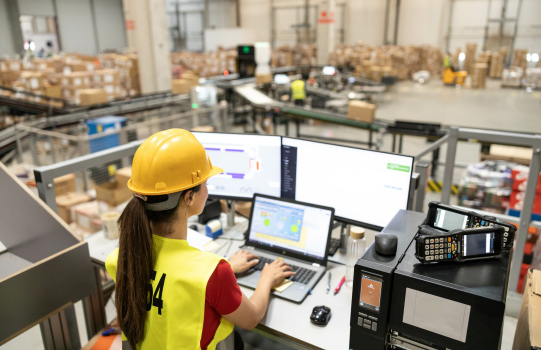
Conduct training courses safely and repeatably
After the plant has been commissioned, the same system platform can be retained as a shadow plant for repeat training courses or for new recruits. It is also possible to replace the real automation system with a PC-based virtual system, e.g. with PLCSIM and WinCC. This can significantly reduce system costs.
The benefits of using a digital twin simulation for training purposes
- Easily bridging language barriers
- Training on the original automation software
- Train for stressful situations in advance
- For training requirements, the WinMOD project will be expanded to adequately model process behaviour.
- With WinMOD Net communication, project parts can be distributed across multiple PCs without any loss of performance.
- The major advantage of this concept is the gradual deepening of the simulation project, from its use in software testing to FAT and training.
- Ensuring the qualifications of operating and service personnel becomes part of quality assurance with an important social component.
- It creates the conditions necessary to meet new requirements and ensure technological security.