Virtual commissioning: Designing and operating plants and processes virtually
With WinMOD, you can create your complete automation system in virtual space.
Simulate down to the smallest detail.
Virtual commissioning
Test control programmes safely and quickly before transferring them to the actual plant.
Virtual operation
Perform service processes regardless of the location of the machine/system and prepare optimisations during ongoing operation.
Virtual machine / system
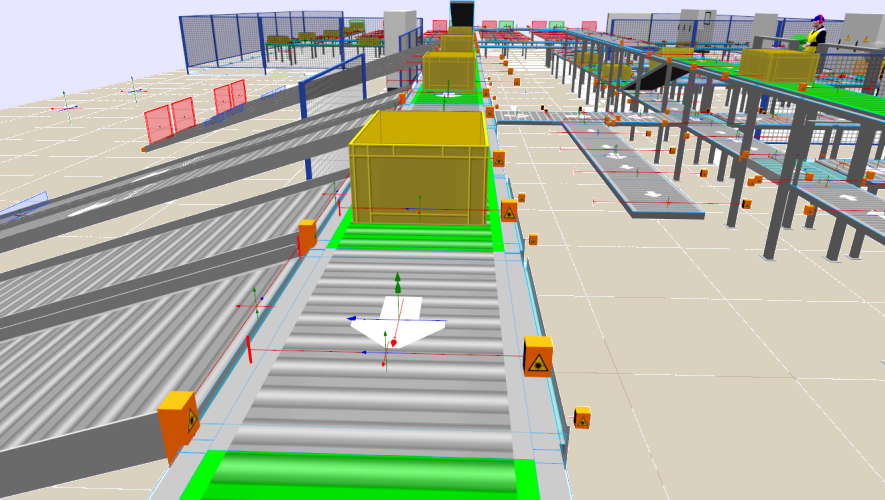
Creation of functional 3D images of real machines that can be connected and put into operation without any software changes.
Virtual commissioning (VC)
Virtual modelling and operation of systems with WinMOD
Virtual commissioning (VC)
Virtual commissioning (VC) corresponds to real commissioning with a virtual machine or system according to current practice. The connected automation system can be real (HIL) or virtual (SIL).
In practice, several different aspects come together when commissioning a real plant.
- Subsequent clarification of the actual functionality of components and systems
- Continuation of software development during commissioning
- functional testing of the software with the actual system
- Parameterisation and optimisation of the automation software with the actual plant
- Briefing of the operator and service personnel
These tasks are very uncertain in terms of time. They are costly because they take place on site, they are risky and they can drastically delay planned commissioning dates.
The innovative alternative is virtual commissioning (VC). In terms of content, this is a real commissioning of the real control system and the original software in conjunction with a virtual machine/system. The virtual machine/system behaves sufficiently similarly to the control system to enable it to be put into operation. The work involved in commissioning can thus be carried out together with the project participants, regardless of location and state of completion.
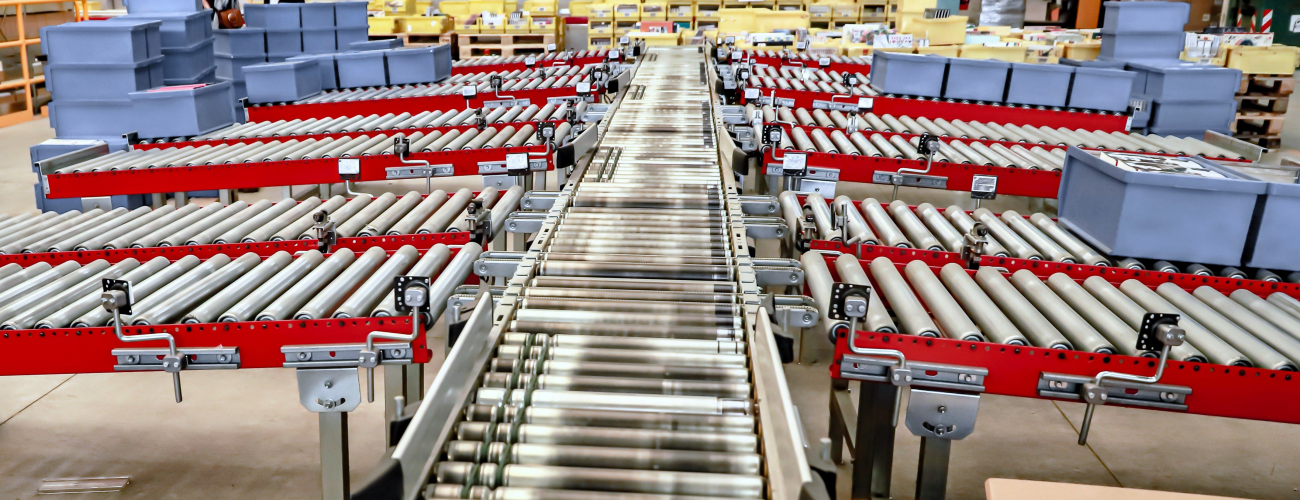
Virtual operation
Once the real machine/system has been commissioned, the virtual machine/system is available for further use. With WinMOD you can
Support service processes regardless of the location of the machine/system and prepare optimisations during ongoing operation.
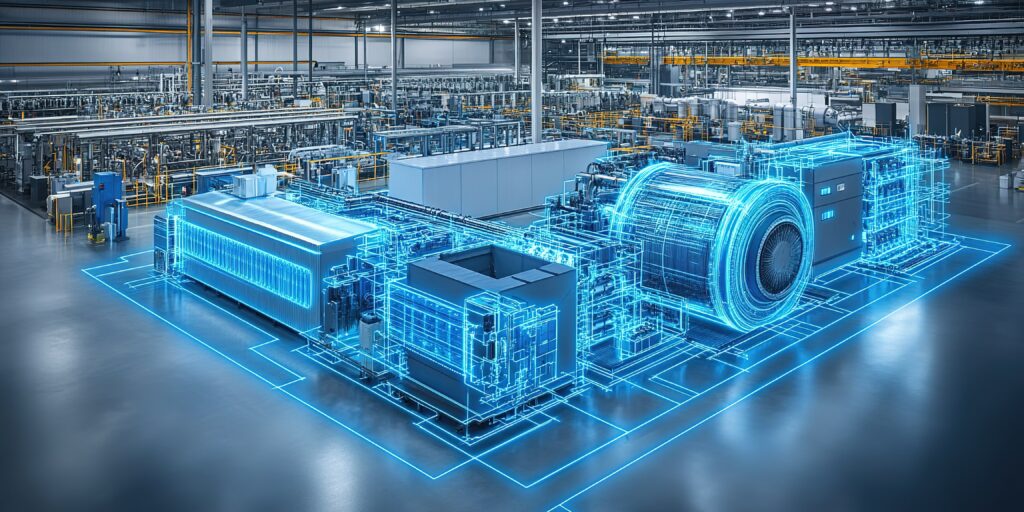
Digital twin or shadow plant
When a real or virtual automation system is operated permanently in parallel with a real plant in conjunction with a virtual plant, this is referred to as a digital twin or a „shadow plant“. During plant operation, optimisations or process changes can be prepared without downtime and without endangering the real plant. Particular attention should be paid to the constant adaptation of the shadow plant to the structure and behaviour of the real plant. This enables a constant comparison between real and virtual behaviour.
The digital twin supports the implementation of migrations. This applies in particular to the replacement of automation systems with extreme requirements for recommissioning while the plant is in operation.
Virtual machine / system
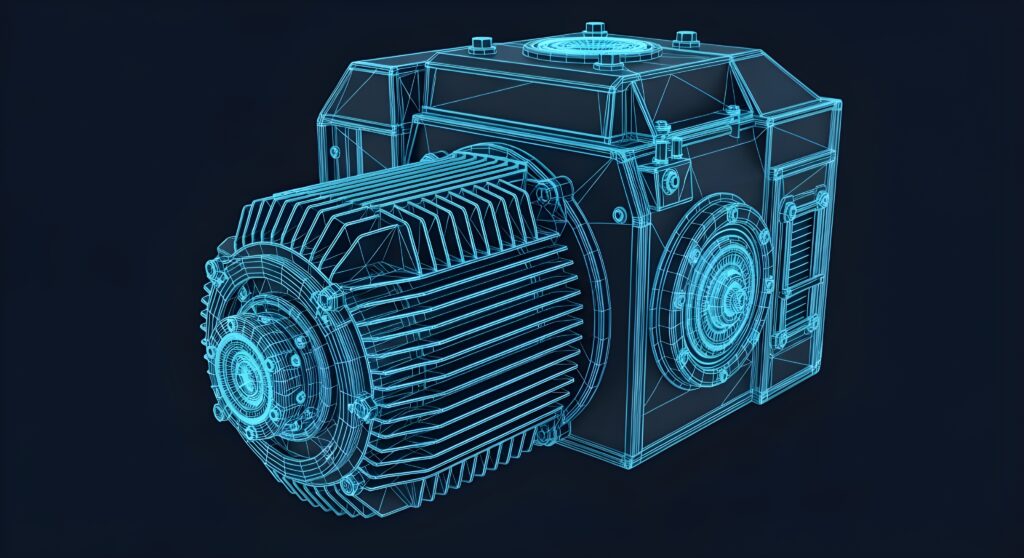
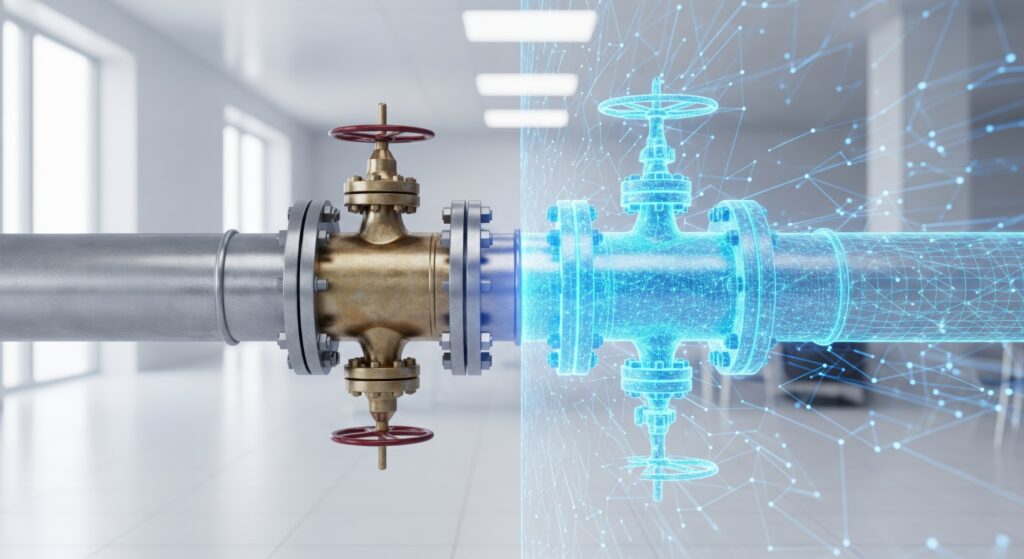
The virtualisation of machines and plants is an intensification and extension of plant simulation.
The result is a model that corresponds to reality in terms of behaviour and communication to such an extent that it can be connected to a real automation system without any software changes and put into operation.
Virtualisation of machines and systems
Since 1991, the WinMOD system platform has been prepared for these objectives. In 2002, the first prototype for a virtual machine tool was created. In 2005, the virtual plant was part of a specification for the VC of a manufacturing cell in automotive engineering.
Virtualisation itself already provides an initial utilization. It creates a functional specification from the perspective of the automation engineer. Deficiencies and errors are identified and rectified at an early stage. A communication platform is available for all subsequent utilizations, which is perceived and understood in the same way by all parties involved.
The virtual machines/systems are created in the WinMOD project from the engineering data of the upstream or parallel engineering processes and must be kept consistent with these.
Virtualisation in process automation
For virtualisation in process automation, the WinMOD system platform has been gradually expanded to include industry- and technology-specific libraries, which enable the necessary simulation depth for holistic modelling. WinMOD communications are utilized for integration into a runtime system for collaboration with specialised simulation tools.
Virtualisation in factory automation
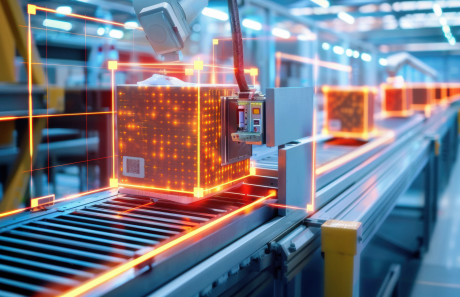
For virtualisation in factory automation, the WinMOD system platform has been expanded to include system modules for WinMOD-SIMLINE with 3D visualisation and technology libraries with material flow capability. This allows machines and systems to be virtualised for all uses from an automation perspective.
Frequently asked Questions about virtual commissioning
What is the abbreviation for ‘virtual commissioning’?
The common abbreviation for virtual commissioning is VC. Internationally and in technical data sheets, you will often also find the abbreviation VC for Virtual Commissioning. Both have become established as standard terms in mechanical and plant engineering.
What does ‘virtual commissioning’ mean? / What is ‘virtual commissioning’? / What is ‘virtual commissioning’?
Virtual commissioning refers to the testing and validation of a plant’s control system using a digital model. This enables PLC programmes, robot programmes and other control functions, as well as their interaction with the virtual plant, to be tested and optimised before the actual plant is fully assembled and commissioned.
How does a virtual commissioning work? / What is the process for virtual commissioning?
Virtual commissioning takes place as part of a clearly defined three-step process:
First, the actual plant is modelled digitally. The PLC is then connected to the control software so that plant processes can be simulated and tested virtually. Errors and areas for optimisation are identified and rectified at an early stage, before the control system is deployed on the actual plant.
What is Software-in-the-Loop (SiL)?
A virtual commissioning process carried out entirely at the software level is known as Software-in-the-Loop (SiL). In these tests, no physical components are used at all:
- The Plant model:Exists as a virtual behavioural model in WinMOD.
- The Control:Runs as an emulated software PLC on the same PC or a networked PC.
- Yours, Advantage:An extremely flexible, location-independent and scalable test architecture that requires no hardware whatsoever.
Why virtual commissioning? / What are the benefits of virtual commissioning?
Virtual commissioning offers a Time saved from to to 75 % during actual commissioning on site. The key benefits of using WinMOD include:
- Early Error detection:Software bugs are now being identified and rectified in a relaxed atmosphere in the office, rather than under time pressure on the building site.
- Solid Cost reduction:They help you avoid unexpected delays for customers, save on expensive travel costs for last-minute call-outs and eliminate the risk of hardware damage caused by collisions.
- Higher Software quality:By enabling the straightforward simulation of fault scenarios, the control code achieves a level of maturity that could not possibly be tested on real machines for safety reasons.
What is the business case for virtual commissioning in the automation industry?
The economic justification (the ROI) for virtual commissioning is best explained by the principle of radical risk minimisation. Any error that is only noticed once work has begun on the customer’s actual construction site costs many times more than it would have cost to rectify it in the office. In practice, the investment in a WinMOD licence and the time spent building the model often pay for themselves simply by preventing the very first system crash.
When considering cost-effectiveness from a holistic perspective, the benefits are not limited solely to reducing travel and accommodation costs. Here is a detailed breakdown of the risks that are effectively mitigated by WinMOD:
| Risk factor | The real problem on the building site | The cost-effective solution through virtual commissioning (e.g. using WinMOD) |
| Test risks (hardware) | PLC code that has not been adequately tested on actual machines poses a serious fire hazard. Faulty control logic can, for example, lead to unexpected movements, causing parts of the system or workpieces to collide with one another and result in damage. | Free collisions: Nothing breaks in the digital twin. You can test critical limit conditions and emergency stop sequences in a completely non-destructive manner, as often as you like. |
| Human risks | Commissioning engineers often work on site under extreme time pressure, whilst suffering from jet lag or construction site noise. Fatigue inevitably leads to a higher error rate. Furthermore, working alongside machines weighing several tonnes that have not yet been tested poses an enormous physical safety risk to staff. | Stress-free engineering: The most critical and error-prone part of the work – debugging the code – is moved to a quiet, safe and ergonomically designed office environment. This protects staff health and helps retain skilled workers. |
| Hidden sources of error | Modern systems consist of tens of thousands of I/O signals. A simple transposition in the sensor configuration within the E-CAD software may go unnoticed mechanically, but leads to a system crash in the software. On site, the nerve-wracking search for a needle in a haystack then begins. | Maximum transparency: WinMOD visualises signals and logic in real time. Signal errors are immediately apparent thanks to the 3D simulation and can be rectified with just a few clicks, before the first actual cable is laid. |
| Financial risks | Delays in delivery can prove extremely costly in plant engineering. In the event of delays, contractual penalties can very quickly eat into the entire project margin. Actual commissioning often acts as a bottleneck, as it can only take place at the end of the project chain. | Reliability of delivery: Through Concurrent Engineering Programmers no longer have to wait until the mechanical components have been fully assembled. The software is tested in parallel, which drastically reduces lead times and ensures the delivery date is met. |
In summary: From a commercial perspective, virtual commissioning is not merely „simulation software“, but the most effective insurance policy against contractual penalties, hardware damage and staff burnout that a plant manufacturer can take out today.
What benefits does virtual commissioning offer users?
Virtual commissioning opens up entirely new, agile ways of working and offers highly specific benefits depending on the area of responsibility within the company. Thanks in particular to concurrent engineering – that is, the parallel development of mechanical, electrical and Automation systems – specialist departments no longer have to wait for one another.
The following overview sets out the specific utilization of the WinMOD platform for the three main target groups within the organisation:
| Target audience | Specific utilization of VC (WinMOD) |
Users in the Automation (SPS-Programmer) | Stress-free Engineering: Complex control code can be tested at leisure in the office. Faulty control logic can, for example, lead to unexpected movements, causing parts of the plant or workpieces to collide with one another and result in damage. |
| Project Manager for the facilities | Planning certainty: Significant risk reduction throughout the project. As software testing begins in parallel with mechanical assembly, lead times are drastically reduced. This ensures that factory acceptance tests can be planned and carried out on schedule. |
| Management | Cost control & ROI: Avoiding significant costs arising from errors and contractual penalties caused by delivery delays. In addition, there is a significant reduction in travel and commissioning costs, as well as the strategic advantage of a higher standard of delivery to the end customer. |
In addition, future plant operators benefit from being able to undergo risk-free training on the virtual model even before the plant is physically completed.